

When the World Turns Zero-Sum
How Europe Can Adapt

I grew up in the Netherlands, lived through Asia’s hypergrowth in Hong Kong and Bangkok in the late eighties, moved to the United States in the early nineties, and eventually returned to Amsterdam. I co-founded a company that spanned the US, Europe, and India. My wife and I raised our children across continents.
What made that life possible was not just opportunity or ambition. It was something far more powerful: a relatively stable, rule-based global order led by the United States.
What was remarkable was not the absence of conflict (there was plenty) but the presence of a shared belief system that made cooperation rational. After the devastation of World War II, Western nations built institutions that rested on a few core assumptions: collaboration beats coercion; rule of law beats raw power; democracy, however imperfect, beats tyranny; and openness in trade, science, and ideas creates more value than it destroys.
It wasn’t naïve. It was strategic. And it worked.
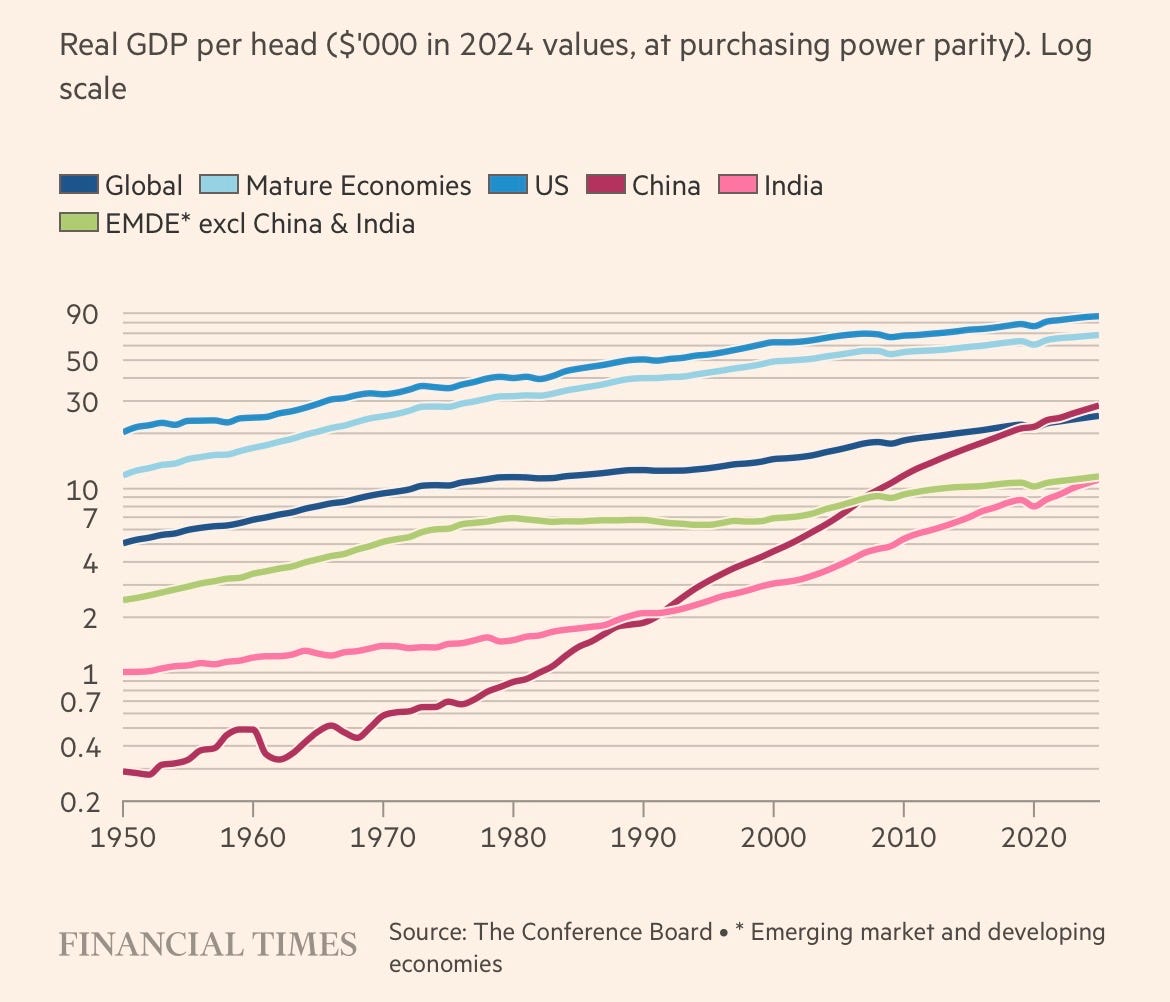
Those beliefs underpinned NATO, the EU, Bretton Woods, the UN, and decades of economic integration. They created the conditions for innovation to flourish and prosperity to compound. In 1950, around 60% of the world lived in poverty. By 2024, it had fallen to roughly 10%. Life expectancy rose from under 50 years to over 70.
The United States’ military, economic, technological, and cultural strength anchored this system. Its credibility made long-term investment rational. It made markets safer. It made trust institutional.
Until it didn’t.
The existential rupture
What we are witnessing today is not a tactical move. It is a structural shift.
Across the Western world, frustration had been growing for decades: bureaucratic institutions that felt disconnected from citizens, unmanaged immigration, uneven economic benefits, and technologies that moved faster than regulations. Into that frustration, leaders stepped forward with simplistic answers and a longing for an imagined past.
They promote a zero-sum worldview. In this world, alliances are optional. Commitments are transactional. Cooperation is weakness. Every gain by your adversary is your loss. Interdependence becomes vulnerability.
And once societies begin to think this way, they start behaving this way. Trust erodes. Institutions hollow out. Power replaces rules.
Recent signals from Washington around NATO are therefore not interpreted in Europe as technical adjustments. They are read as something deeper: a question of whether shared commitments still mean what they used to. And once trust becomes negotiable, everything changes.
Europe’s slow drift into fragility
Europe’s current vulnerability did not arrive overnight. Strategic weakness almost never does.
It emerges from decades of seemingly sensible choices: delaying defense spending in a stable world, sourcing energy from Russia to reduce costs, favoring consensus over speed, expanding regulation to control (perceived) risk, and letting national interests override deeper integration. None of these decisions was fatal on its own. Together, they produced fragility.
“This is the Catch-22 of politics, and perhaps of life: people don’t change until a crisis obliges them, and by definition a crisis is never to be wished for.” Janan Ganesh
Bureaucracy became a drag on innovation and scale. Fragmentation slowed capital, technology, and markets. Mario Draghi’s competitiveness analysis makes it clear: Europe struggles not for lack of talent, but for lack of speed, scale, and integration. A report by a committee led by the former ASML CEO, Peter Wennink, recently highlighted similar issues in the Netherlands.
In the 21st century, economic and technological power are not separate from security. They are security. A continent that cannot mobilize capital quickly, scale breakthrough technologies, secure energy systems, or integrate defense capabilities will discover that its values are only as strong as its capabilities.
Fragmentation becomes danger
Nowhere is this more evident than in defense: incompatible systems, duplicated procurement, and national silos that drain resources and weaken deterrence. The EU recognizes this and has published Readiness 2030. The speed of implementation will determine its effectiveness.
The same pattern appears in the economy. Europe may be a single market for goods, but far less so for services, capital, and digital scaling. Barriers that once seemed tolerable now translate directly into geopolitical weakness.
In calmer times, this was inefficiency. In a ruptured world, it is risk.
Rupture clarifies what matters
As Mark Carney, Canada’s PM, put it bluntly: “We are in a rupture, not a transition. The old order is not coming back. Nostalgia is not a strategy.” Ruptures break systems, but they also create clarity.
“You cannot live within the lie of mutual benefit through integration, when integration becomes the source of your subordination.” Mark Carney
In our book Changing Fast & Slow, we describe three pace layers that determine the adaptability of a system:
• Existential: shared purpose, beliefs and vision for the future
• Strategic: direction, regulatory, resource allocation, big bets
• Operational: execution and integration
Europe must now move on all three. Incrementalism will not cut it.
Existentially, it must renew its commitment to openness, rule of law, and collaboration, not as nostalgia, but as strength. Strategically, it must streamline regulation, mobilize risk-seeking capital at scale, and place bold bets on sovereignty in energy, technology, and defense. Operationally, it must quickly further integrate markets, procurement, infrastructure, and systems.
Europe’s hidden strength
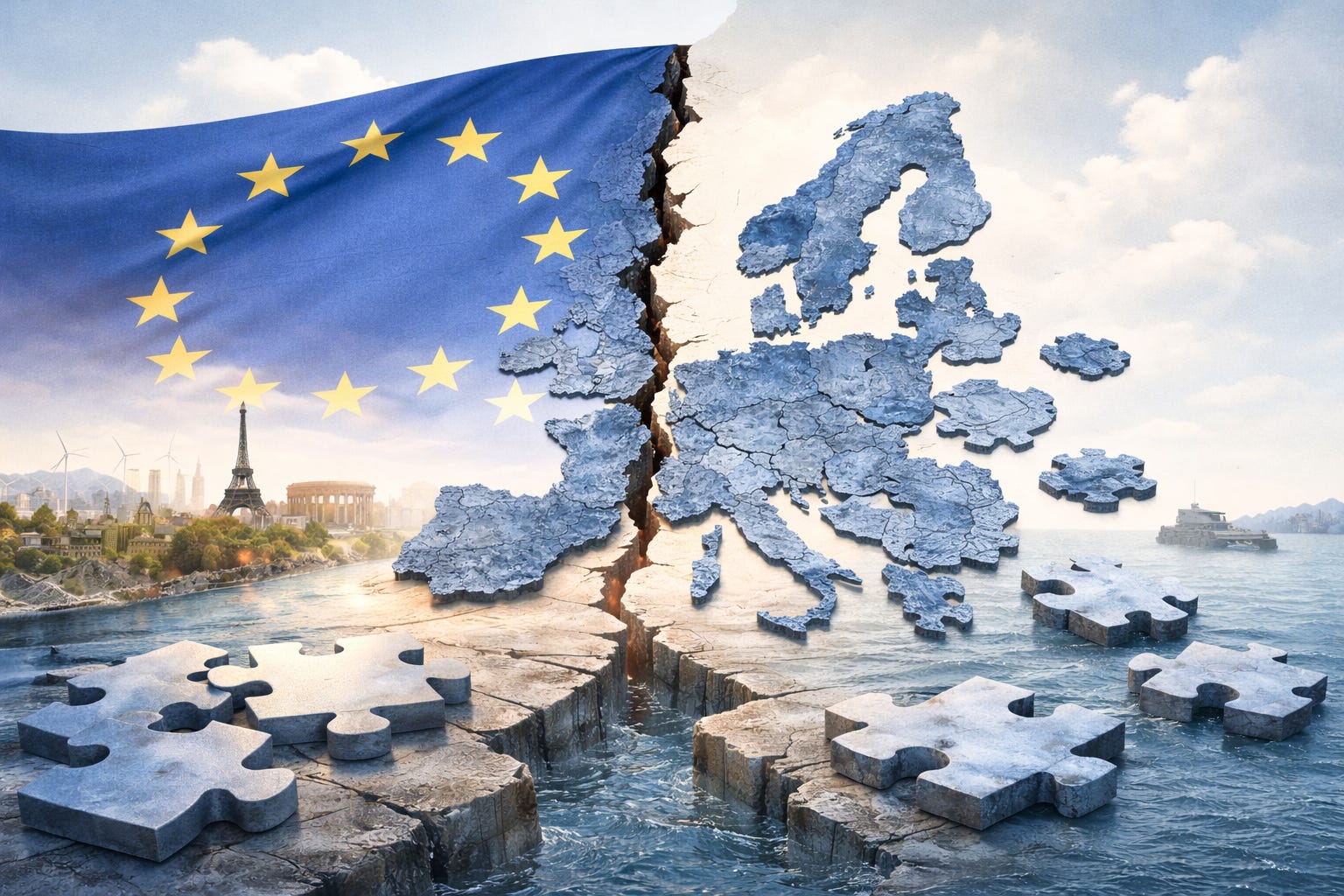
Europe’s worst response to a harsher world would be more fragmentation. In a zero-sum environment, small states become irrelevant. Scale is power. And Europe has scale. A roughly €28 trillion economy and a 450 million-person market are geopolitical assets few regions can match. But only if it is truly integrated.
That means regulation that enables experimentation rather than permanent caution. Defense is treated as shared infrastructure. Energy and digital sovereignty are built as strategic foundations. And flagship initiatives with CERN-like ambition across AI, compute, quantum, biotech, the electric tech stack, materials, and defense technologies.
These are the new battlegrounds of sovereignty.
From zero-sum back to strength
The postwar order succeeded not because it was perfect, but because it made cooperation rational and prosperity compounding. Zero-sum thinking does the opposite. It shrinks the pie, hardens identities, and turns interdependence into fear.
Europe does not need to adopt that mindset to survive it. But it does need strength. And Europe’s strength has never been nationalism. It has been integration.
The real existential question is not only whether Europe can defend itself, but whether it still believes in the kind of world worth defending: one where collaboration beats coercion, rule of law beats raw power, and openness beats fear.
Because if we abandon that belief, we will inherit the zero-sum world we claim to resist. This rupture is forcing Europe into its next evolution: not as a bureaucratic union, but as a dynamic one: integrated, courageous, and designed for sovereignty in a harsher world.